Have you looked at the price tag of a four-year college degree lately? If the number made your jaw drop, you are not alone. For decades, high school seniors were told that getting a traditional bachelor's degree was the only reliable ticket to middle-class security. But times have changed, and so has the math.
With total U.S. student loan debt climbing past $1.81 trillion across 43 million borrowers, people are taking a hard look at the alternative options. Over 60% of Americans now view trade skills and technical training as having equal or even greater value than a standard college diploma. When you combine staggering tuition rates with growing uncertainty around desk jobs in an era of rapid technology shifts, trade programs start looking less like a backup plan and more like a brilliant approach.
Skill-based education is taking center stage in the modern economy. Instead of spending four years studying general theory, trade students learn practical skills that industries need right now.
Comparing Cost and Time Investment to a 4-Year Degree
Let's break down the actual numbers, because the contrast is stark. The average cost of a four-year degree ranges from $120,000 at public in-state universities to over $180,000 at private institutions. Once you factor in interest payments and indirect expenses, that total investment can easily cross $270,000. Graduates frequently carry between $31,960 and $39,000 in student loan debt out the door.
Trade and vocational schools tell a completely different story. Total program costs typically range between $5,000 and $33,000 for an entire six-month to two-year course. At public community colleges, certificate programs often cost under $8,000 total. Because many trade students benefit from employer sponsorships or paid apprenticeships, many graduate with minimal debt or none at all.
Then there is the issue of time. Most bachelor's programs actually take around five years to finish today. That means a standard college student gives up three to four years of full-time income, which adds up to roughly $120,000 to $150,000 in lost wages. Trade students, on the other hand, often earn $15 to $25 per hour while learning their trade through hands-on apprenticeships.
So what does this mean for your bank account in the long run? Trade school graduates typically hit their break-even point just two years after entering the workforce.¹ Average university graduates take around 12 years to pay off their initial investment and reach that same point. In fact, top technical schools deliver ten-year returns on investment between $500,000 and $607,000, outperforming many traditional universities.²
Exploring High-Demand Trade Careers
Although roughly 42% of recent college graduates end up underemployed in jobs that do not require a degree, skilled trades are facing a severe shortage of workers.³ Across North America, five experienced workers are retiring for every two new entrants into the field. That gap creates huge opportunities for anyone entering the market today.
Physical trades are also uniquely resistant to automation. AI might write code or generate reports, but it cannot re-wire a circuit breaker, repair a broken main line, or install a commercial climate control system.
Here are a few high-paying, high-growth technical careers worth watching
• Elevator and Escalator Installers: These specialists earn a median annual wage of $102,420, with top earners bringing in nearly $110,000 per year due to strict safety codes and urban expansion.
• Dental Hygienists: Requiring only a two-year associate degree, this healthcare path offers a median annual salary of $94,260 with steady job growth driven by an aging population.
• Electricians: Facing a national shortage of 300,000 workers, electricians earn a median wage between $62,350 and $71,490, while top earners in high-demand states pull in over $88,000 annually.
• Wind Turbine Technicians: Positioned at the center of the clean energy transition, this field is projected to grow between 50% and 60% over the next decade, offering median starting wages of around $62,580.
• HVAC Technicians: With smart building technology expanding rapidly, skilled technicians earn median salaries near $60,000, with specialized systems experts making over $90,000.
Choosing an Accredited Trade Program
If you decide that a technical career fits your goals, selecting the right school is your next big move. High-quality programs lead straight to great jobs, but poor-quality institutions can leave you with useless certificates.
You should always verify institutional accreditation first. Look for programs recognized by established organizations like the Commission of the Council on Occupational Education (COE) or the Accrediting Commission of Career Schools and Colleges (ACCSC). Proper accreditation make sures the program qualifies for federal financial aid and meets recognized standards.
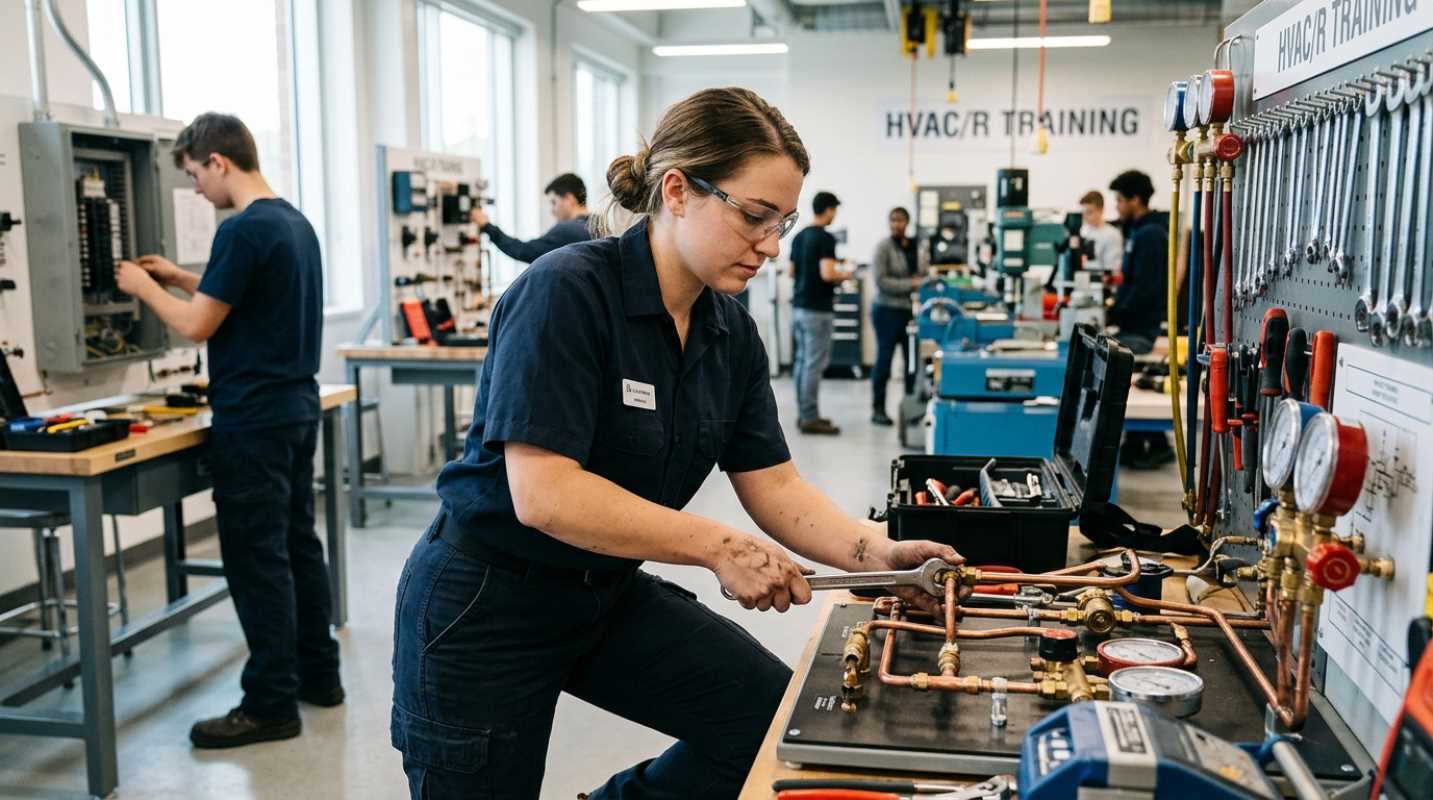
Look closely at the school's facilities and curriculum structure. Quality technical training usually maintains a 60/40 or 70/30 ratio of practical hands-on lab work to classroom theory. The equipment in the building should match what regional employers actually use on job sites today. You will also want to check for direct pathways into registered apprenticeship programs and partnerships with local trade unions or regional companies.
Avoid institutions that exhibit clear warning signs
• High pressure sales tactics: Reputable schools give you space to review financial details rather than pushing you to sign loan paperwork on your first visit.
• Vague accreditation labels: Be skeptical of phrases like "state registered" or "nationally recognized" if the school cannot name a specific accreditor recognized by the U.S. Department of Education.
• Guaranteed job promises: Quality schools offer solid career placement support, but no legitimate program guarantees employment upfront.
• Inflated tuition costs: Never pay $20,000 for a basic certificate that your local community college offers for $4,000 with the exact same credential outcome.
Building a Future-Proof Career
Earning your initial trade certificate or completing an apprenticeship is just the beginning of your career journey. The most successful tradespeople treat their skills as a changing toolkit.
As building codes update, green technologies expand, and smart devices integrate into everyday infrastructure, ongoing certifications keep your work in high demand. Learning specialized diagnostic software or earning advanced safety credentials can quickly push your earning power into the top tier of your local market.
Do not overlook soft skills either. Technical expertise gets you into the field, but clear communication, punctuality, and problem-solving turn standard technicians into job site leaders, project managers, or independent business owners. Many of today's master electricians and licensed contractors started out as entry-level apprentices and eventually built successful companies of their own.
At the end of the day, picking a career path comes down to what actually fits your financial realities and personal goals. You do not need to take on tens of thousands of dollars in debt just to satisfy someone else's definition of success. By choosing a high-demand trade, you can build a stable, lucrative career on your own terms and start earning a living while others are still sitting in lecture halls.
Sources:
1. Blue Collar Career Path
https://www.bluecollarcareerpath.com/blog/trade-school-vs-college
2. Forbes
https://www.forbes.com/sites/robertfarrington/2025/07/20/student-debt-or-paycheck-the-case-for-trade-school-over-college/
3. Austin Career Institute
https://austincareerinstitute.edu/blog/trade-school/trade-schools-offer-better-roi/
*This article on realjobs is for informational and educational purposes only. Readers are encouraged to consult qualified professionals and verify details with official sources before making decisions. This content does not constitute professional advice.*






.png)